Cells and modules
A pack is built from groups of cells. If a section is weak or imbalanced, that section may be repairable or replaceable rather than condemning the whole pack.
So why condemn a complete EV or hybrid battery pack before proving which part has actually failed? Where possible, we diagnose, remove, recover and repair the problematic battery section or component instead of jumping straight to a used or new pack.
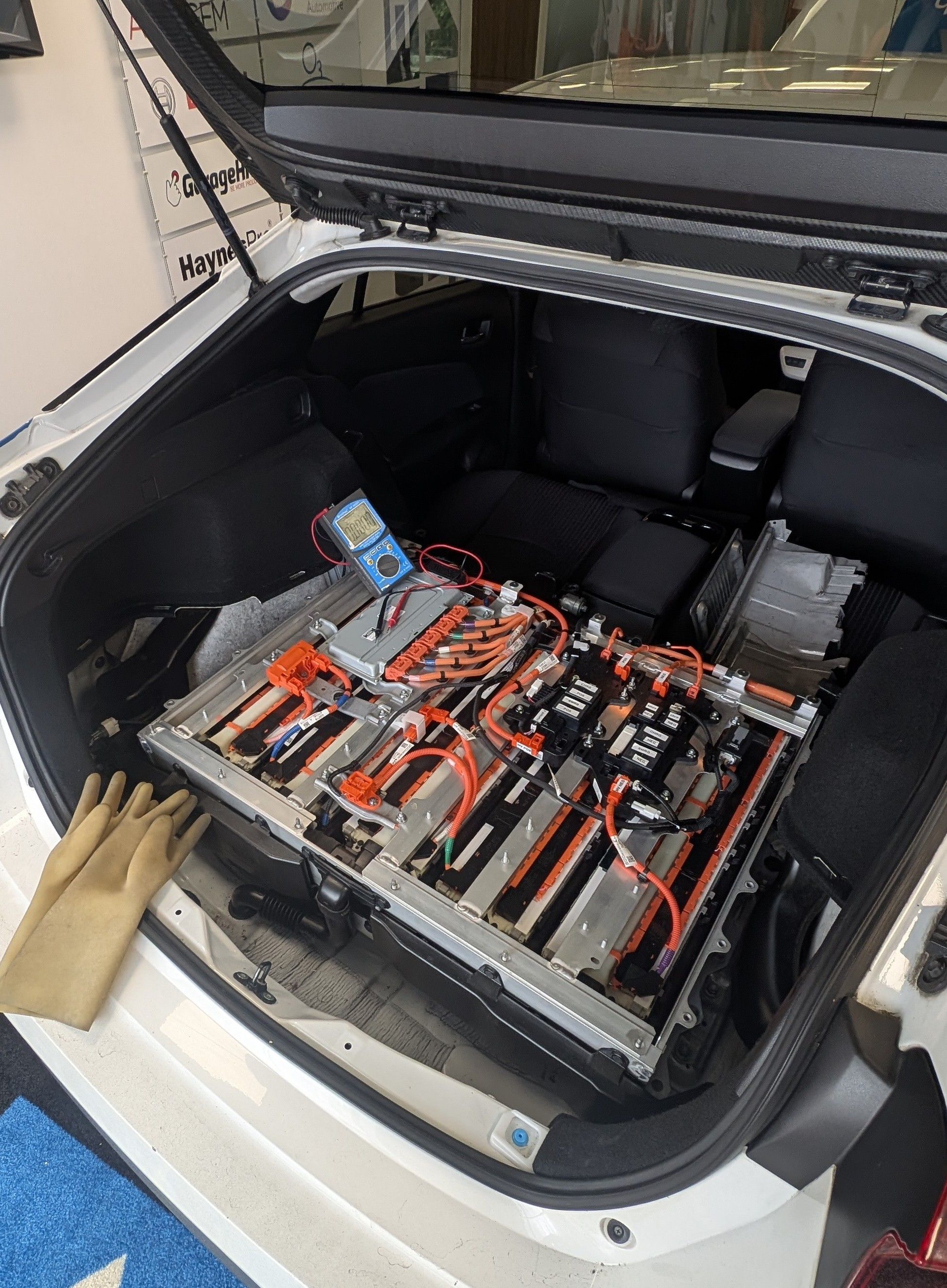
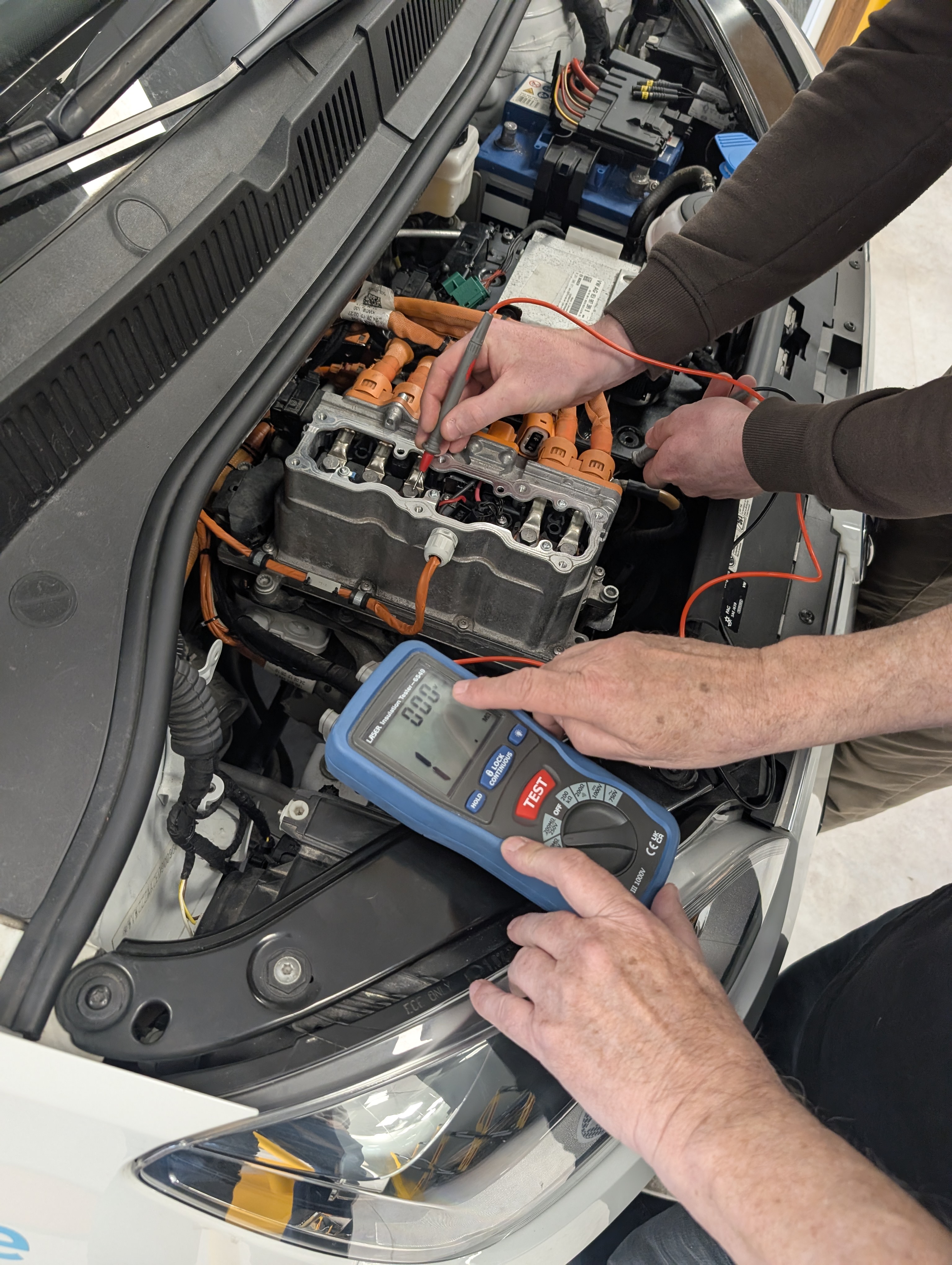
EV and hybrid battery packs are made from many cells arranged into modules and sections. The pack also contains contactors, sensors, busbars, wiring, temperature monitoring, isolation monitoring and a battery management system. One weak area can make the whole vehicle look like it needs a complete pack.
Our job is to prove the fault before expensive parts are replaced.
A pack is built from groups of cells. If a section is weak or imbalanced, that section may be repairable or replaceable rather than condemning the whole pack.
High-voltage contactors connect and disconnect the pack. They are known failure points and have a limited operating life.
Temperature sensors, voltage taps and internal wiring faults can trigger serious battery warnings even when most of the cells are usable.
Replacing a complete pack when a repair is possible wastes money and materials. Repair keeps serviceable parts out of landfill.
A scan code may say battery fault, isolation fault, contactor fault, module voltage fault or charging fault. That is only the starting point. The repair decision comes from live data, measurement, pack condition and controlled testing.
We do not sell a battery repair until the fault route makes sense. The vehicle is checked first so we know whether the problem is inside the pack, outside the pack, a charging issue, a control issue or a high-voltage safety issue.
We scan the EV/hybrid systems, read live battery data, inspect charging behaviour and confirm whether the battery pack is genuinely the suspect area.
If the evidence points inside the pack, we remove or access the pack safely using high-voltage procedures and the correct tooling.
We test cell groups, modules, contactors, sensors, wiring and internal control components to locate the actual cause before parts are changed.
Where practical, we repair the failed section, recover low modules with controlled charging, rebalance the pack and retest the system before return.
When a pack or module section drops too low, the vehicle may refuse to charge or go ready. Battery recovery is a controlled process: slow charging, monitoring voltage rise, checking temperature behaviour and confirming the section responds correctly.
Balancing matters because the battery management system watches the difference between the strongest and weakest cell groups. If one section is far behind the rest, the vehicle may limit power, reduce range, stop charging or flag a battery fault. Rebalancing helps bring the pack back into a stable operating window before final testing.
High-voltage battery packs are expensive, dangerous if handled incorrectly, and easy to misdiagnose. We combine proper diagnostic evidence with repair knowledge so customers get a sensible route, not a guess.
A failed contactor, sensor or cell group can stop the vehicle even when most of the battery remains usable.
You get a clear explanation of what we found, why it matters and what the realistic repair options are.
Used packs can be unknown, new packs can be extremely expensive, and unnecessary replacement is the most costly route.
Call with the vehicle model, warning message, charging behaviour and any diagnostic report you already have. We will tell you whether a battery pack diagnostic, recovery or repair assessment is the right next step.